.png)
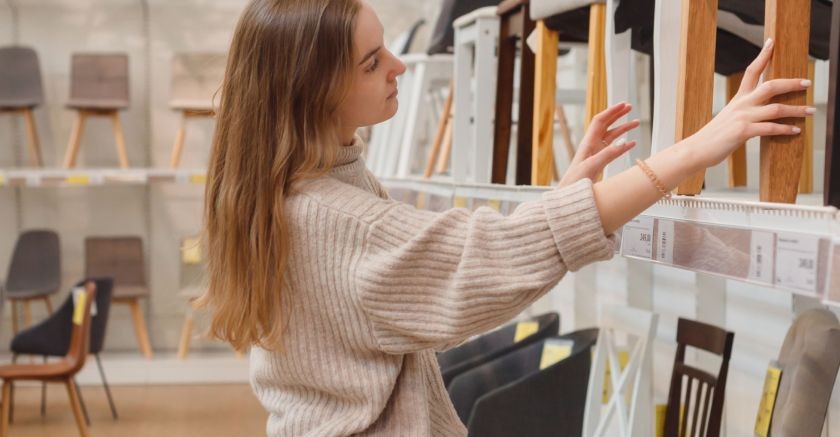
Shopping for furniture is a deeply personal experience. It’s about finding the right pieces that turn a house into a home, whether it’s that perfect sofa for the living room or a dining table that becomes the center of family dinners. But, as many in the furniture retail industry know, the experience can often feel frustrating and fragmented. Customers need quick answers—whether it's about stock availability, delivery times, or product details. When those answers are slow or unclear, it can leave both customers and store associates frustrated.
The challenge, then, is improving that experience while making operations more efficient. Store associates shouldn’t have to waste time searching through multiple systems to find product details or inventory information. Instead, they need tools that give them immediate access to what they need, when they need it.
This is where retail AI technology comes in. The right tools can connect all your systems—inventory, sales data, customer preferences—and put that information at your team’s fingertips.
For furniture stores, Evoneer's Store Assistant AI is that tool. By integrating with your existing systems, it enables real-time access to data across platforms, making inventory management simpler and customer service faster. Store associates can quickly answer questions, check availability, and offer personalized recommendations—without leaving the sales floor.
The result? A smoother, more enjoyable shopping experience for your customers, and a significant boost to your store's operational efficiency.
The AI Revolution in Furniture Retail
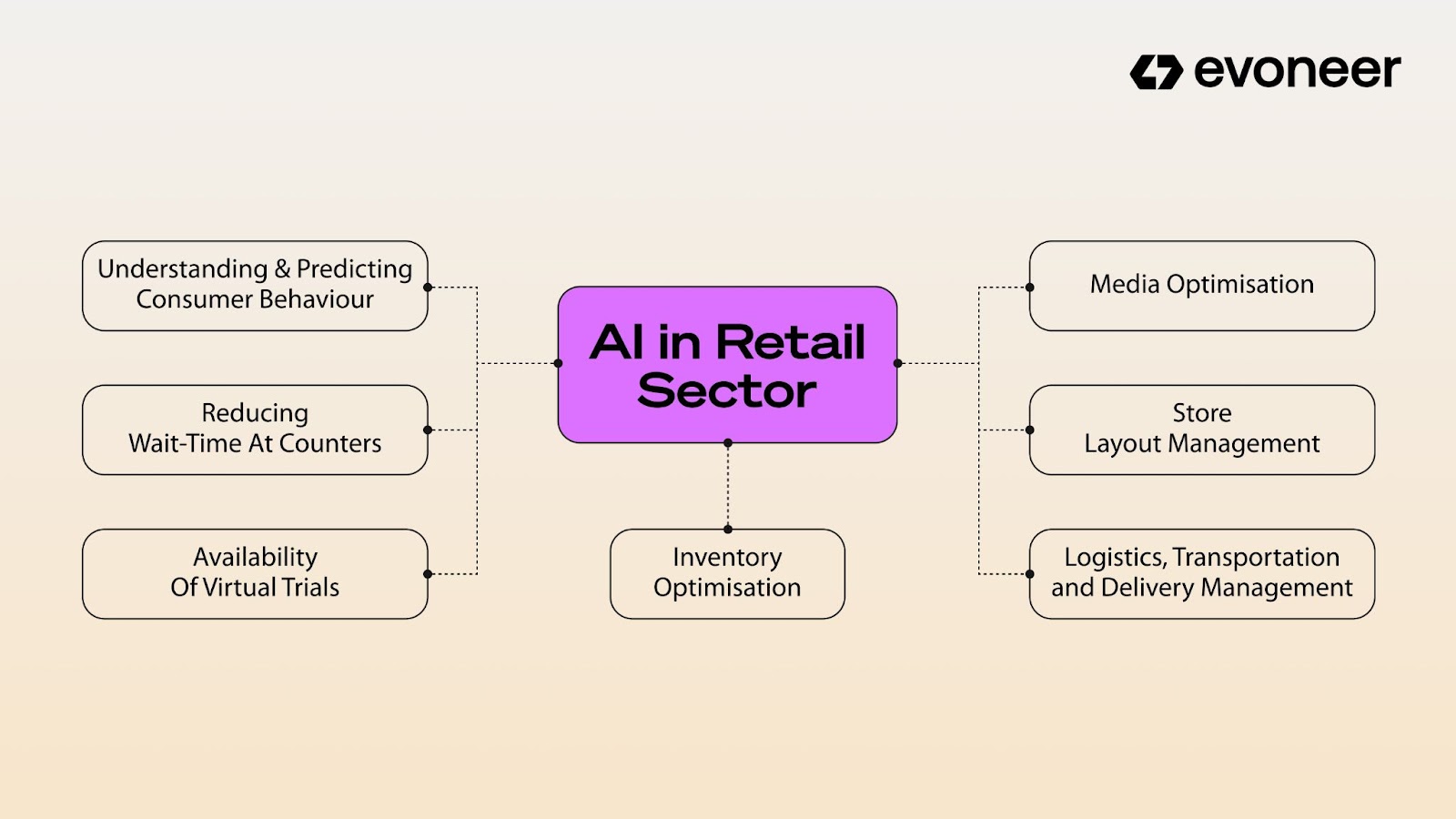
In furniture retail, keeping customers satisfied means being able to answer their questions quickly and accurately. With a wide variety of products, fluctuating stock levels, and evolving customer preferences, staying ahead of customer needs is a constant challenge. Missed opportunities, such as failing to meet demand or overstocking unsold items, can lead to lost sales and dissatisfied customers.
By tapping into real-time data, AI helps retailers make better, faster decisions. It empowers them to stay on top of demand and quickly adapt to shifting trends.
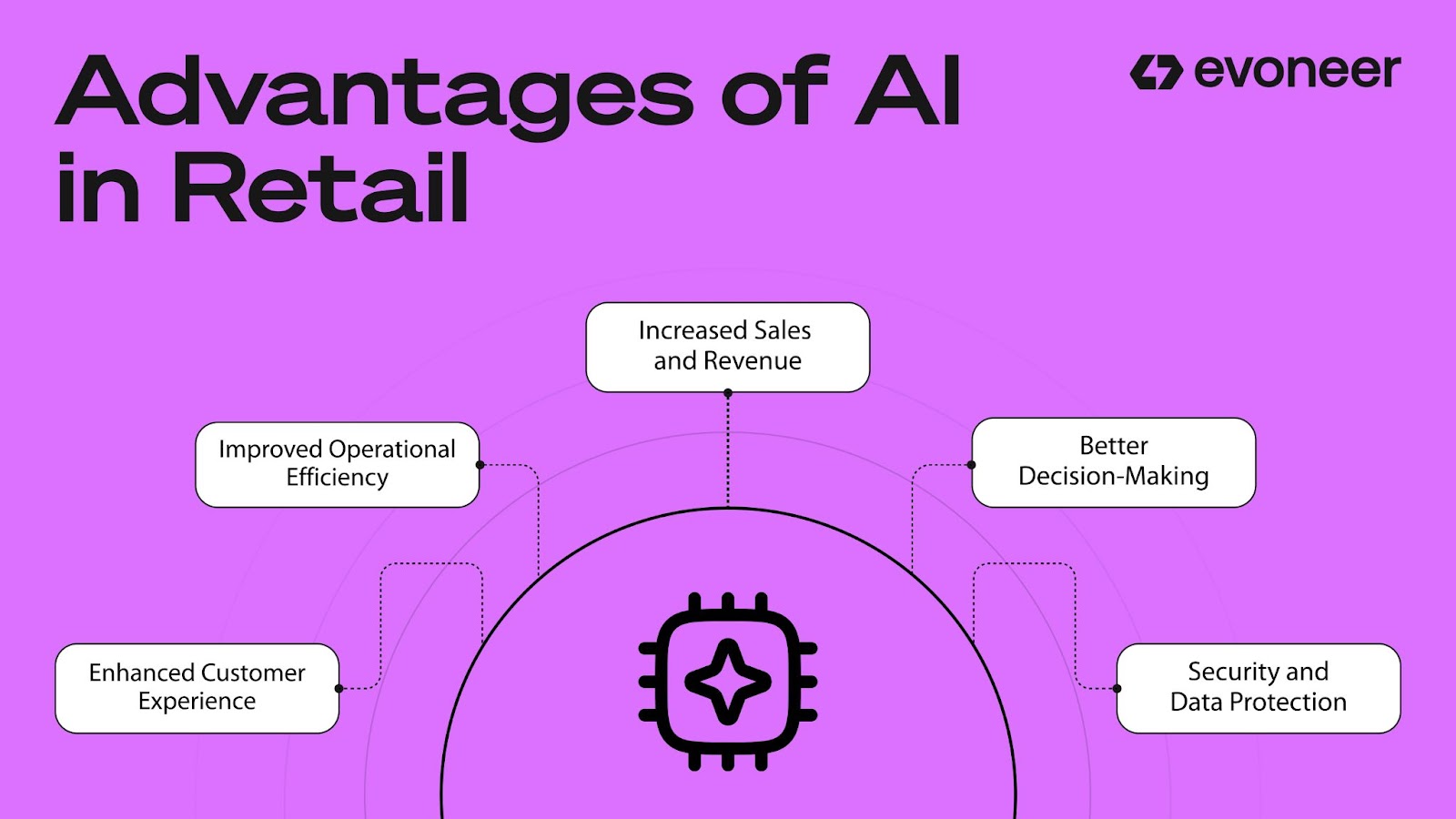
Benefits of AI in retail include:
- Real-time decision-making: Making data-driven decisions by analyzing consumer behavior, trends, and sales history.
- Predictive analytics: Forecasting demand more accurately using real-time data, seasonal trends, and past behaviors.
- Inventory optimization: Minimizing stockouts and overstocking, ensuring products are always available while avoiding excess inventory costs.
- Improved profitability: Aligning inventory with customer demand, reducing waste, and increasing turnover.
In fact, according to McKinsey’s 2025 survey, a significant portion of organizations using generative AI in business functions like inventory management reported substantial benefits. Retailers who have implemented AI-driven demand forecasting have seen up to a 10-20% increase in stock turn and a 5-15% reduction in inventory costs. For furniture retailers, this means more efficient inventory management, reduced waste, and better alignment with consumer demand, ultimately leading to higher profitability.
Beyond inventory, AI in retail also empowers businesses to offer personalized experiences at scale. AI algorithms analyze customer behavior, purchase history, and browsing patterns to deliver tailored recommendations and product suggestions. This not only enhances the shopping experience but also increases the likelihood of upselling and cross-selling, improving both conversion rates and average order value.
AI-Powered Assistants: The Backbone of Personalized Retail Experiences
Furniture retail is all about offering customers the right products at the right time, but with so many options and shifting preferences, that can be difficult to manage. Customers want personalized recommendations and fast, accurate information, but manually managing this vast amount of data can overwhelm even the most well-equipped teams. AI-powered assistants help retailers to deliver this level of service more efficiently, ensuring customers get the answers they need without putting extra strain on staff.
Rather than relying on fragmented systems, retail AI assistants like Evoneer integrate with existing retail platforms, providing staff with immediate access to accurate, real-time data. This enables store associates to make better decisions quickly, whether it’s checking inventory, answering customer queries, or suggesting products that match a customer’s tastes. Evoneer bridges the gap between the digital and physical aspects of retail, ensuring that customers get the information they need right when they need it.
Evoneer's Store Assistant AI: Revolutionizing Furniture Retail Operations
Evoneer's Store Assistant AI is a retail AI tool specifically designed to optimize workflows for furniture retailers. By connecting existing systems—like POS, inventory, and ERP—it provides associates with real-time access to product details, inventory levels, and sales insights. The result is a more efficient and responsive operation, where store associates can immediately assist customers with personalized information, without having to search through multiple systems or wait for updates.
For example, when a customer asks about a specific product, store associates can instantly access its availability, dimensions, delivery options, and related products. By cutting out delays and unnecessary steps, store associates can serve customers faster, reduce errors, and make smarter, quicker decisions that ultimately improve store efficiency.
AI Chatbots for Personalized Customer Support
In furniture retail, exceptional customer service means more than just providing answers—it’s about responding quickly with the right recommendations. With Evoneer’s AI assistant, store associates have a powerful chat tool that provides immediate access to product details, inventory levels, and customer preferences. This means they can offer personalized recommendations and answer questions instantly, all while engaging with customers face-to-face.
By seamlessly integrating with existing retail systems, Evoneer ensures that all store associates, managers, and decision-makers have real-time data at their fingertips. This streamlined access to information not only improves daily operations but also supports more strategic decision-making across the store, ultimately driving both customer satisfaction and overall store performance.
AI Assistants in Managing Customer Preferences
Understanding customer preferences is essential to providing a personalized shopping experience, but tracking these preferences manually can be challenging. Evoneer's Store Assistant AI simplifies this by collecting data from different customer interactions—in-store, online, and during customer service conversations. By identifying patterns in behavior and purchase history, Evoneer enables store associates to make instant, relevant product recommendations, tailored to each customer's unique needs and preferences. This leads to higher satisfaction, as customers are more likely to find exactly what they’re looking for, without the hassle of sifting through endless options.
AI for Inventory and Supply Chain Optimization
Managing inventory and optimizing supply chains are fundamental to running a successful furniture retail operation. As consumer demands fluctuate and supply chains become more complex, retailers face the challenge of keeping everything in balance. In 2023, inventory distortion—including both out-of-stocks and overstocks—cost retailers an estimated $1.77 trillion globally. With AI-powered solutions, retailers can:
- Gain real-time visibility: Monitor inventory levels, streamline reorder processes, and track shipments.
- Minimize waste: Align products with consumer demand, ensuring availability when needed while reducing excess stock.
- Reduce costs: Proactively adjust stock levels and automate replenishment to minimize stockouts and overstocks.
This leads to more efficient operations, reduced waste, and improved alignment with consumer demand.
Real-Time Inventory Management with AI
Retailers face the ongoing challenge of balancing product availability with accurate stock levels, especially when demand and inventory fluctuate in real-time. By using retail AI to monitor inventory, furniture retailers can immediately identify discrepancies between physical stock and digital listings, reducing the risk of overselling or miscommunicating stock levels to customers.
This level of visibility enables stores to respond quickly to stock shortages or overstock situations by automatically adjusting stock levels, ordering replenishments, or reallocating inventory between locations. As a result, furniture retailers can meet customer demand efficiently, minimizing stockouts and reducing excess inventory that occupies valuable space and resources.
Demand Forecasting and Stock Optimization
One of the toughest challenges in furniture retail is knowing exactly how much inventory to keep on hand and when to restock. Evoneer's AI Store Assistant helps solve this by analyzing real-time data from various sources, like product performance, sales trends, and inventory levels, to provide more accurate demand forecasts and enable proactive stocking decisions.
This approach ensures that the right products are available at the right time while also helping retailers avoid the costs of excessive inventory or urgent restocking orders. With more precise demand insights, store managers and buyers can plan ahead, optimize stock levels, and minimize waste, driving both efficiency and profitability.
Streamlining Supply Chains with AI
AI in retail gives businesses the ability to gain real-time visibility into inventory, track shipments, and predict potential delays across their supply chain. With this data, they can automate inventory replenishment, proactively adjust stock levels, and streamline logistics. AI helps eliminate inefficiencies and reduce both stockouts and excess inventory, ensuring products are always available when customers need them. By optimizing the supply chain, retailers can cut costs and improve delivery reliability, ultimately enhancing customer satisfaction.
AI-Driven Pricing Strategies
Setting the right price in furniture retail can be challenging, especially with fluctuating demand, seasonality, and competitors constantly adjusting their prices. Retail AI helps by analyzing real-time data on customer behavior, product popularity, and market trends. This gives retailers the ability to:
- Adjust their prices based on real-time data, ensuring they stay competitive without undervaluing products or overpricing.
- Optimize profit margins by balancing demand, cost, and customer expectations in pricing decisions.
- Adapt pricing for seasonality to reflect shifts in demand during peak and off-peak periods.
- Monitor competitor pricing and adjust accordingly to maintain a competitive edge in the market.
Dynamic Pricing Models Powered by AI
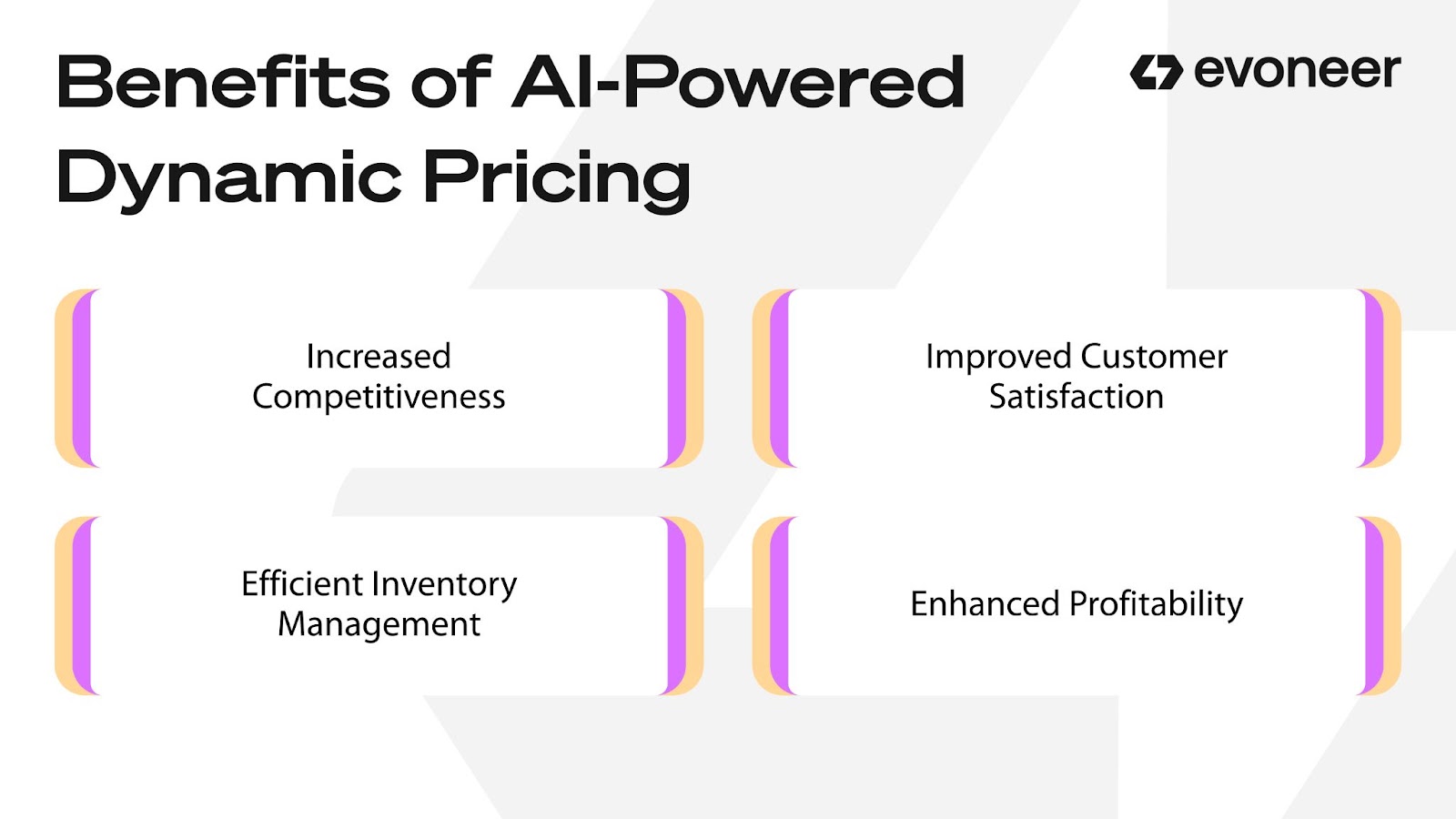
Instead of relying on static pricing models, AI helps retailers make decisions based on current demand and stock levels. For example, if a certain item is selling quickly, AI can recommend a slight price increase to capitalize on demand, or if a product isn’t moving as fast, it can suggest a promotion or price drop to move it off the shelf. This approach ensures that pricing remains responsive to real-time market conditions and customer behavior, helping retailers stay agile and maximize both sales and margins.
Price Optimization Algorithms
Furniture retailers know that getting pricing right is crucial for profitability. AI-driven price optimization helps eliminate the uncertainty, ensuring prices reflect both demand and margin goals. By analyzing various factors like sales history, stock levels, and customer demographics, retail AI can pinpoint the ideal price point for each product, ensuring retailers capture maximum value. For example, when faced with overstocked items, AI can suggest markdowns that still protect profitability, while for high-demand products, it can recommend incremental price increases to capitalize on the surge. These smart adjustments allow retailers to make pricing decisions that are both profitable and aligned with customer expectations, without the need for constant manual oversight.
The Future of AI in Furniture Retail
The way people shop for furniture is changing, and retailers need to adapt quickly. AI helps them do that by making smarter decisions with real-time data and automating processes that used to take hours. Retailers are no longer guessing what their customers want—they can anticipate needs, adjust inventory instantly, and create personalized shopping experiences every single time.
Integration with Smart Homes and IoT
As smart home technology becomes more widespread, furniture retailers have an opportunity to offer added value by promoting furniture that integrates seamlessly with popular smart home systems. For example, adjustable beds or sofas can be paired with voice assistants like Amazon Alexa or Google Assistant, allowing customers to adjust seating positions with simple voice commands. Beyond comfort, smart furniture can help create a personalized home environment—such as a smart mattress that syncs with a smart thermostat to adjust its temperature based on user preferences, or a sofa that triggers specific lighting scenes, dimming the lights for a "movie mode" when someone sits down. Additionally, smart furniture can enhance energy efficiency by integrating with home routines; for instance, a chair or desk with built-in charging stations might automatically power down when not in use, helping customers save on electricity while still enjoying a smart, connected home.
AI-Driven Sustainable Practices
As the demand for sustainable products and practices grows, furniture retailers are under increasing pressure to reduce their environmental footprint. Retail AI can help retailers make smarter, more sustainable decisions throughout their operations. For example, AI can help optimize inventory, ensuring stores only order what they need, reducing the chances of excess stock that might end up as waste. AI also plays a key role in selecting materials, helping retailers identify more eco-friendly options without sacrificing quality or durability. By streamlining supply chains and automating processes, retailers can minimize energy usage, reduce waste, and lower their carbon footprint—all while maintaining a profitable business. It’s a practical way to align with the growing expectations of environmentally conscious shoppers, without compromising on the bottom line.
Robotic Assistance and Interactive In-Store Experiences
The modern furniture shopper is less interested in a simple purchase and more focused on creating the perfect atmosphere for their space. To meet these expectations, some furniture retailers are turning to robotic assistance and interactive technology to elevate the in-store experience. Robots assist customers by guiding them to the right sections, providing real-time product details, and offering suggestions based on preferences, allowing store associates to focus on more complex, personalized interactions.
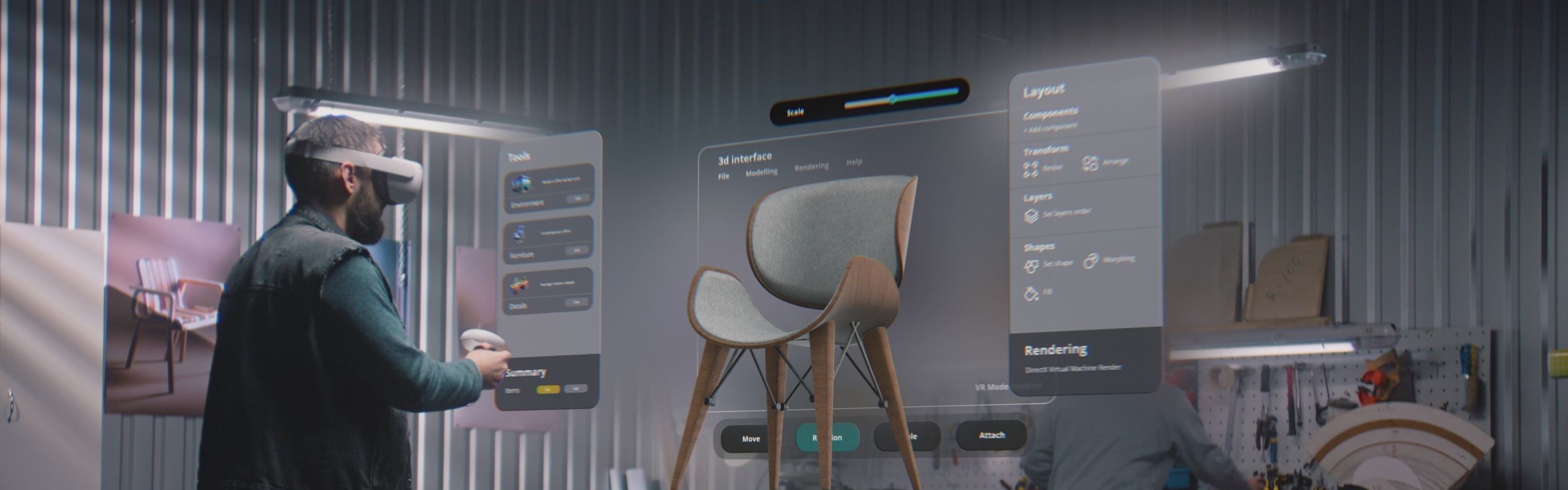
Interactive displays, including augmented reality (AR), allow customers to visualize how furniture will look in their homes. They can experiment with different colors, sizes, and configurations, getting instant feedback to support their decision-making. These technologies make the shopping experience more efficient, personalized, and engaging, leading to better customer satisfaction and quicker purchase decisions.
Best Practices for Implementing AI in Furniture Retail
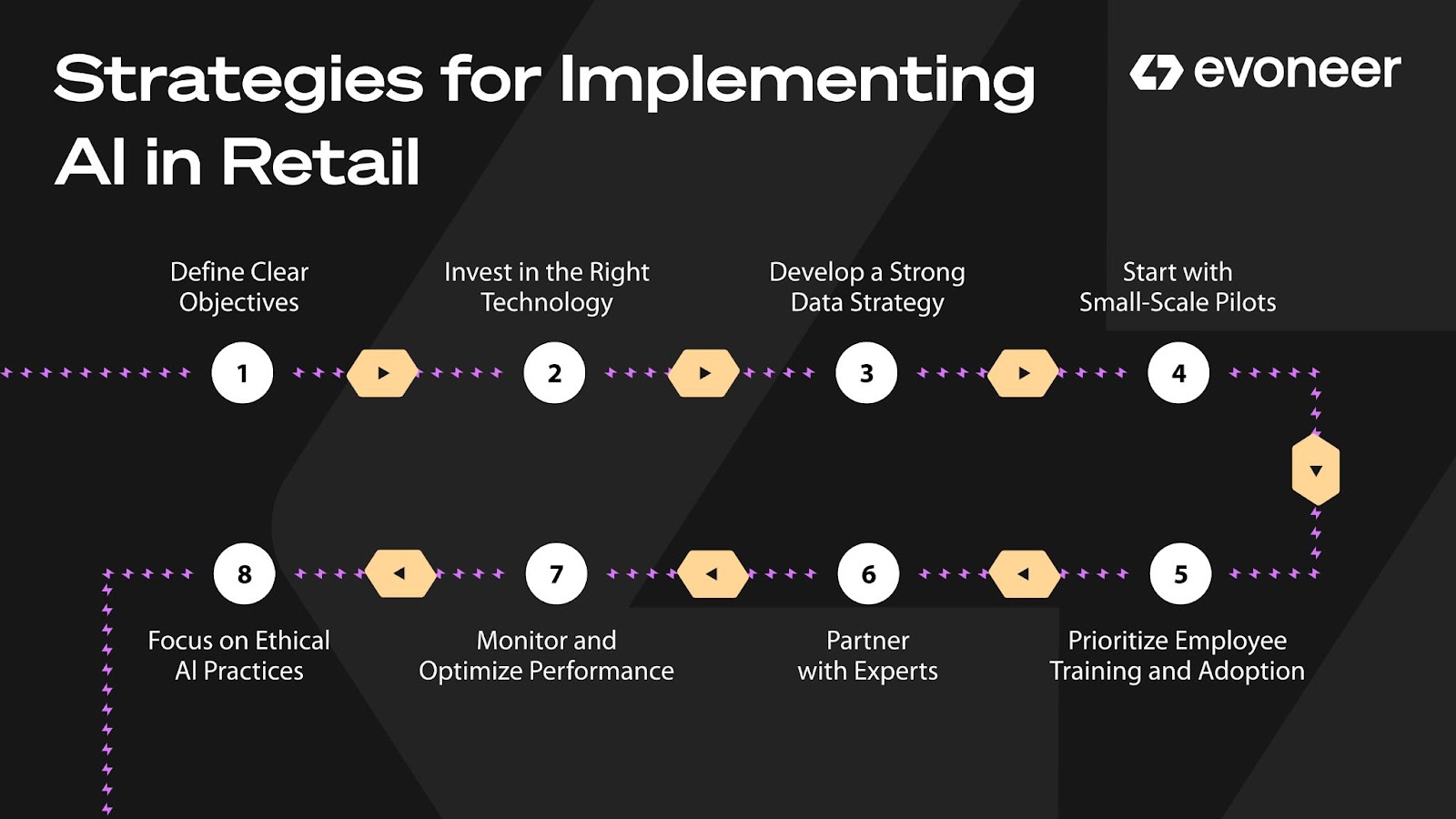
AI in retail brings big potential for furniture businesses, but to realize its value, it’s important to focus on proper implementation, from team training to choosing the best tools for your needs.
Training Your Staff on AI Tools
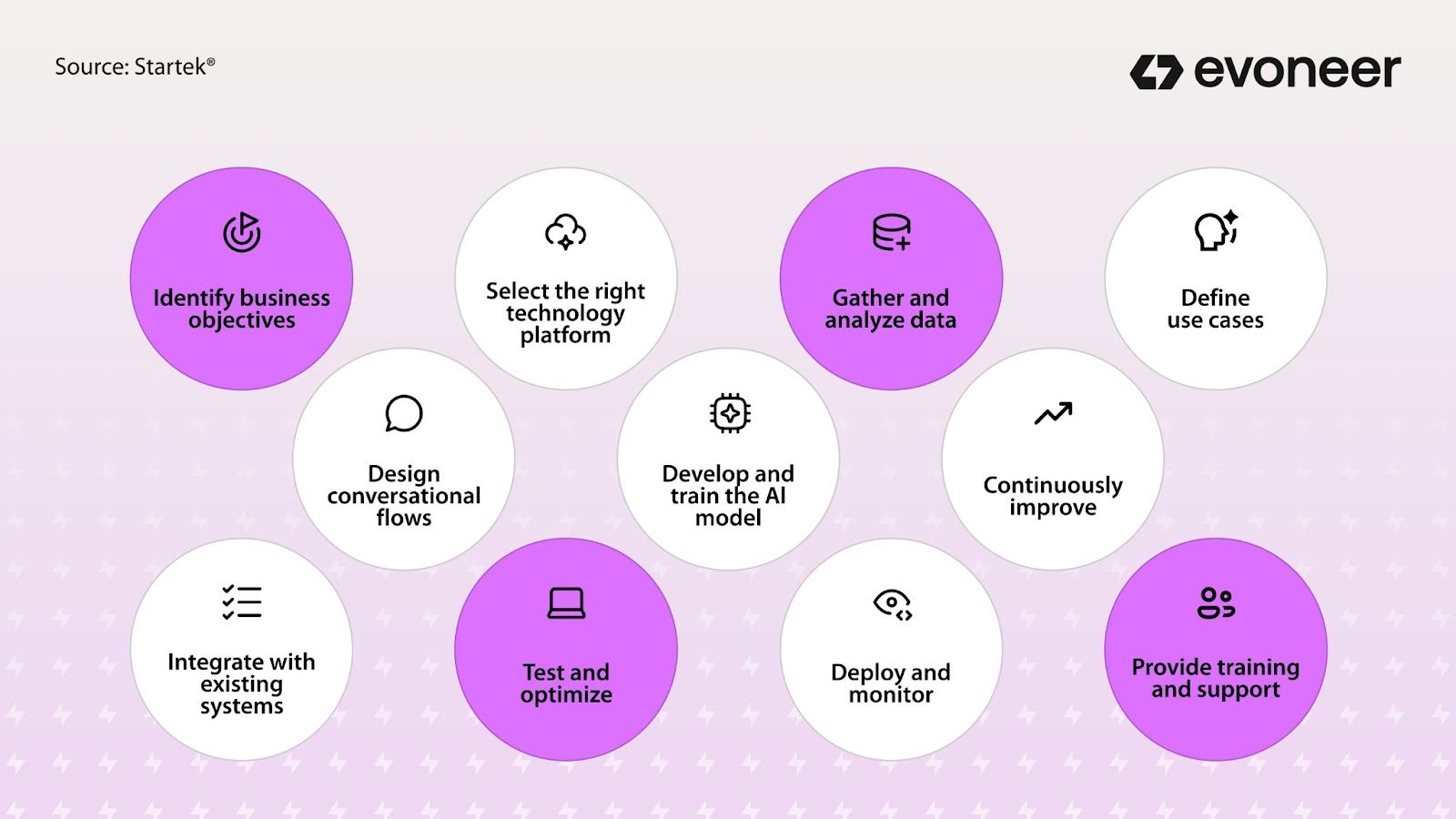
One of the most important steps in successfully implementing AI in furniture retail is ensuring your team knows how to use it effectively. AI tools can be powerful, but they are only as good as the people using them. Investing time and resources in training will help your staff feel confident with the new technology and fully utilize its capabilities.
Training should focus on how to use AI for specific tasks, such as optimizing inventory management, improving customer service, and personalizing sales strategies. Ongoing training and support will also keep employees engaged and ready to adapt to new features or updates, as AI continues to improve and evolve.
Choosing the Right AI Solutions for Your Business
Choosing the right AI solution for your furniture retail business is much like finding the perfect sofa. Just as no single sofa fits every living room, no single AI tool fits every retail operation. The focus should be on finding an AI tool that works with your specific business needs. Whether you're looking to optimize inventory management, enhance customer service, or improve pricing strategies, the right AI solution should address your specific challenges.
Start by identifying the areas where AI can make the biggest impact, and then evaluate tools that integrate well with your current systems. Look for scalability, so the solution can grow with your business, and ensure there’s solid customer support for troubleshooting. Don’t forget to check how customizable the AI tools are—tailoring them to your processes can maximize their effectiveness.
Data Privacy and Security Considerations
With AI, the power to deliver great customer service comes with the responsibility to protect sensitive data. Shoppers share personal details with the expectation that their information will be treated with respect and kept safe. When AI tools collect and analyze this data to offer a better experience, it’s essential to ensure that it’s protected from any misuse.
Choosing the right AI solutions means prioritizing privacy. Look for tools that comply with regulations like GDPR or CCPA and are transparent about how customer data is handled. In addition, regularly updating security protocols and conducting audits helps protect against potential vulnerabilities.
When customers feel confident their data is in safe hands, they’re more likely to engage with your brand and make repeat purchases. Ultimately, strong security measures help preserve both customer trust and the reputation of your business.
The future of furniture retail requires adaptability and efficiency. With customers expecting more personalized experiences, and inventory management growing more complex, retailers need the tools to respond quickly to changes, make data-driven decisions, and deliver exceptional service consistently.
That’s where technology, like Evoneer's Store Assistant AI, comes in. Evoneer simplifies the complexity of modern furniture retail by streamlining inventory, enhancing customer service, and delivering real-time insights. With this solution, your team can focus on what truly matters—providing an exceptional experience to every customer.